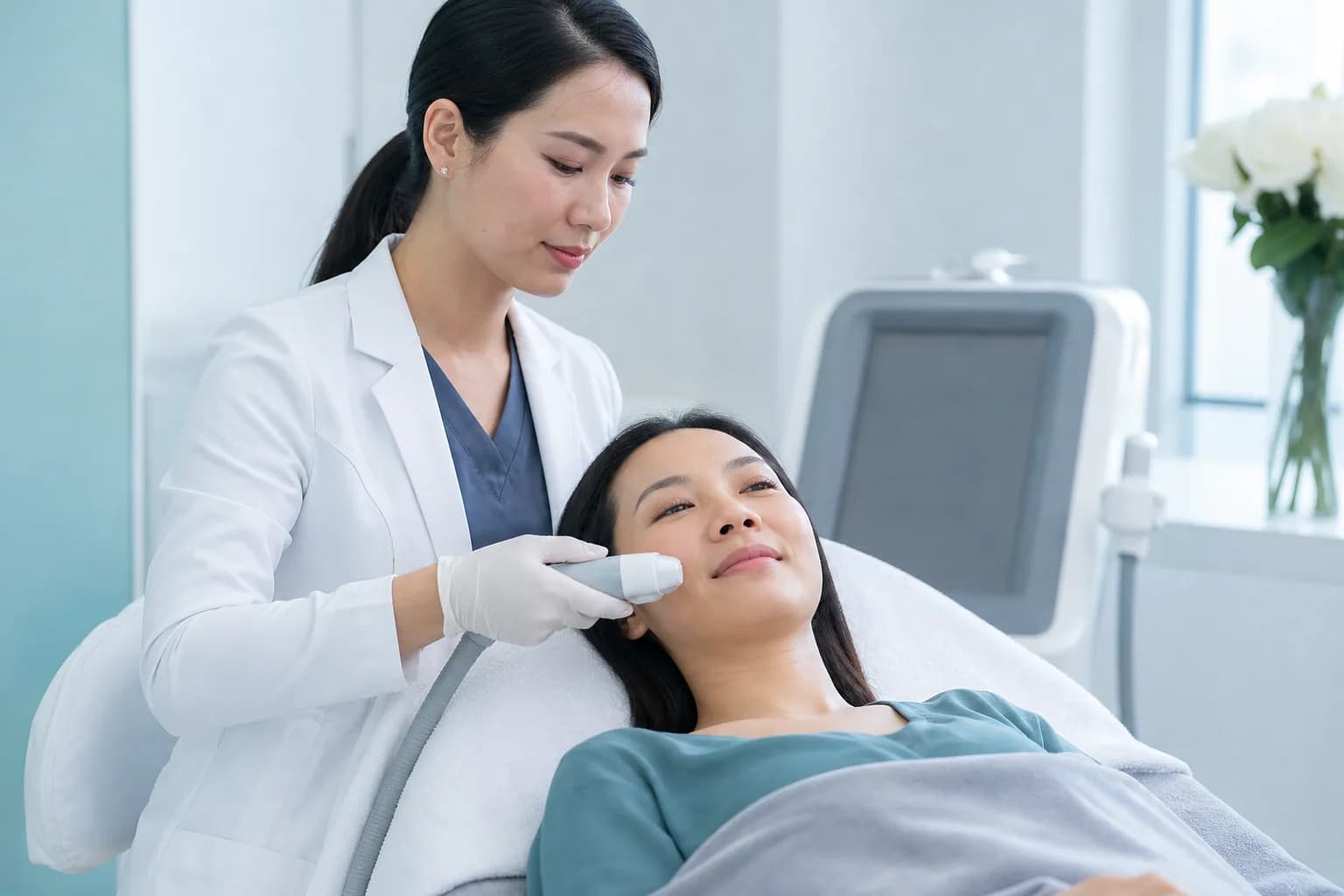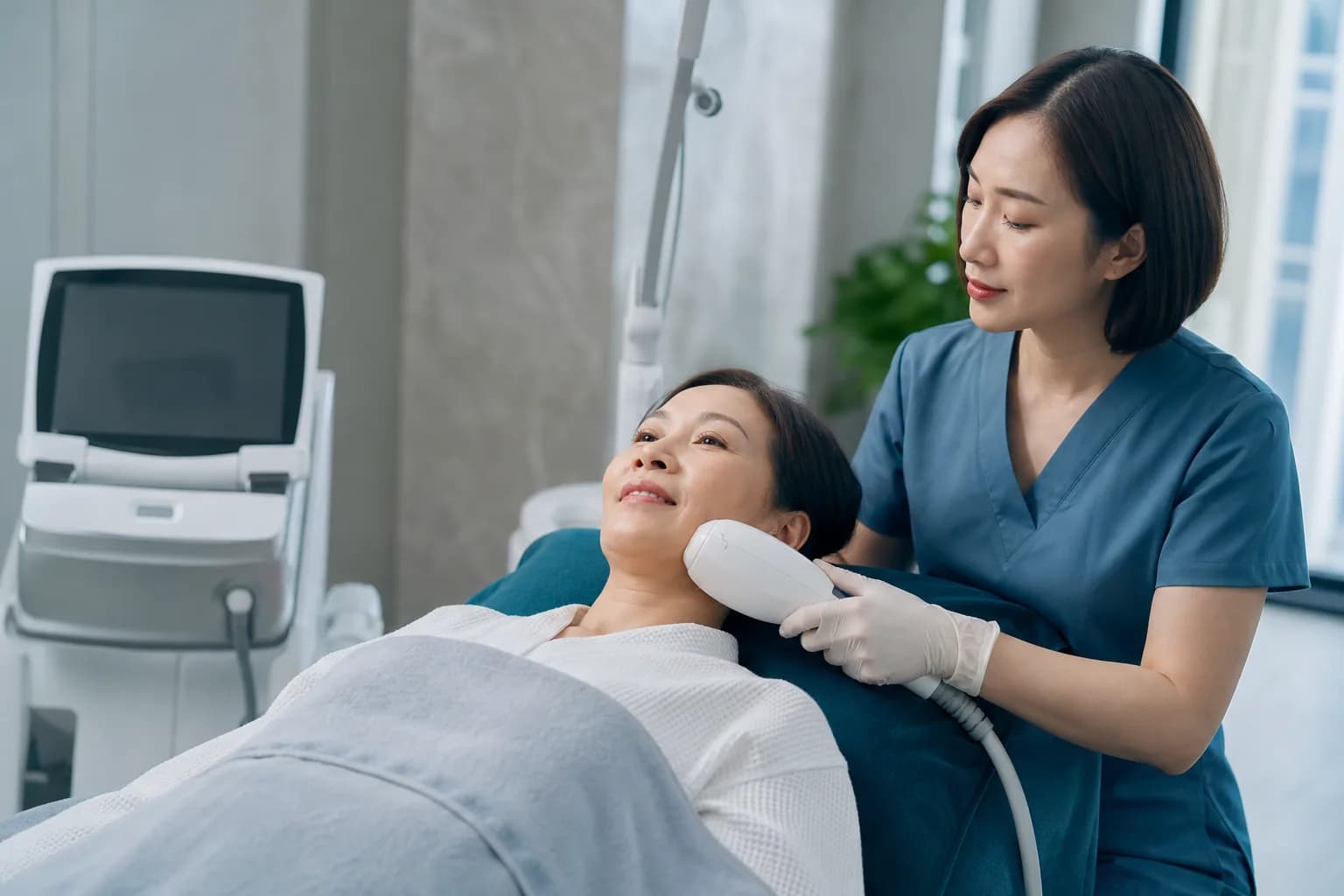
How Does Thermage Work? Heat, Cooling and Collagen Explained
How does Thermage work? A clear guide to monopolar RF heating, cryogen cooling, AccuREP tuning and the collagen remodelling that follows — for readers in Hanoi.
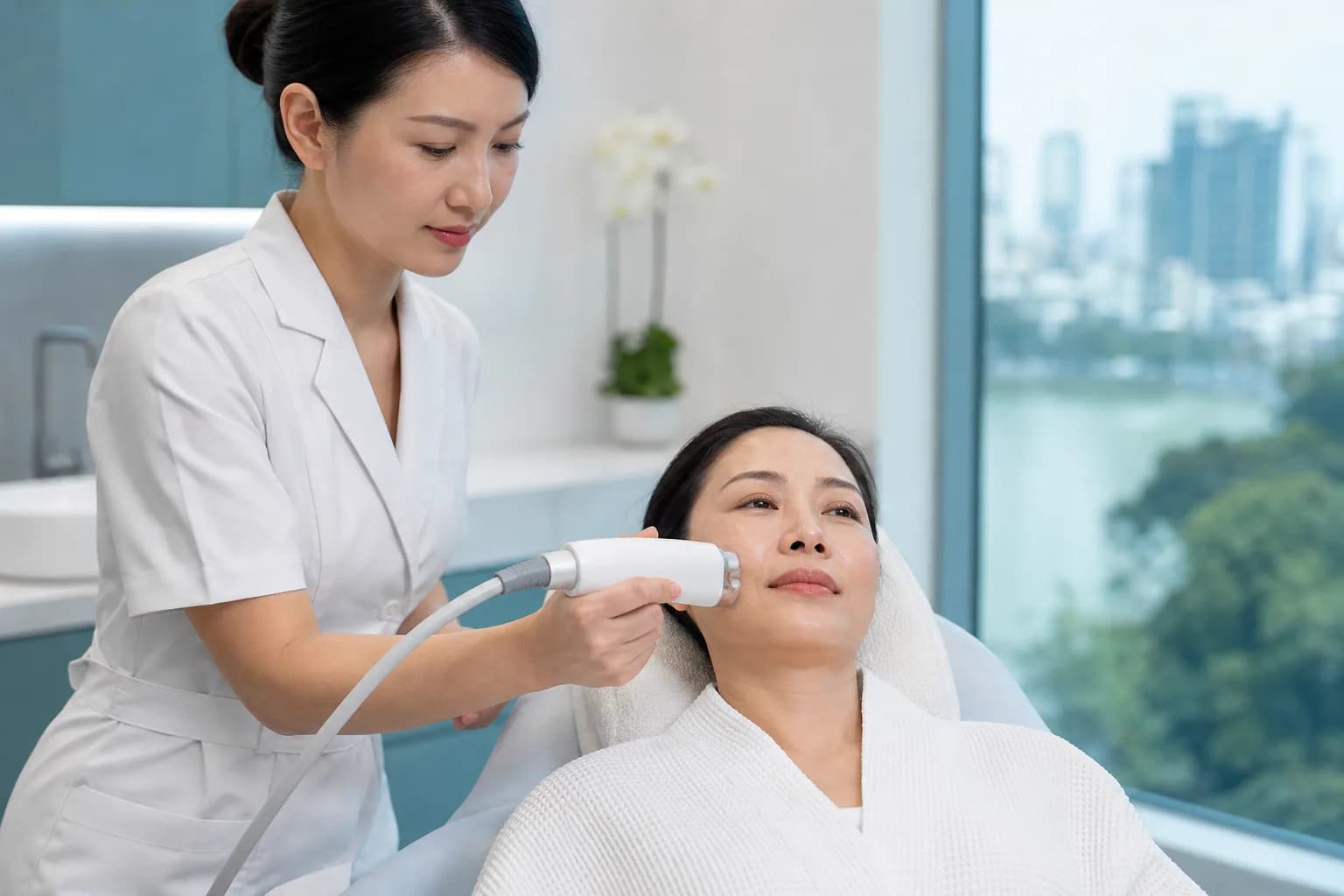
How does Thermage work? In short, Thermage FLX delivers monopolar radiofrequency (RF) energy into the deeper layers of your skin to heat collagen-rich tissue, while built-in cooling protects the surface. That controlled heat triggers two responses: immediate tightening of existing collagen and a gradual rebuilding of new collagen over the following months.
If you are researching Thermage FLX in Hanoi or elsewhere in Vietnam, the mechanism matters. It explains why results build slowly, why comfort and safety depend on technique, and what to ask a clinic before you book. This guide walks through the heat, the cooling, the tuning technology and the collagen timeline in plain language, with notes for expats and medical tourists comparing options in Thanh Xuan, Hanoi.
See it in 3D: watch Thermage FLX's monopolar radiofrequency heat the dermis and fibrous septae while the skin surface is cooled in our interactive 3D skin model.
The Core Mechanism: Monopolar RF and Volumetric Heating
Thermage FLX delivers monopolar radiofrequency (RF) energy. The device is made by Solta Medical, and its handpiece sends RF current through your skin toward a return electrode. Because the current completes a circuit through tissue rather than sitting on the surface, the energy warms a volume of skin, not a thin top layer.
The main target is the deep dermis and the fibrous septae — the connective bands that help support the skin. Collagen fibers sit throughout this layer, and controlled heating is what prompts the skin's own remodeling response. This is the foundation of how Thermage works.
What "volumetric" heating means
Volumetric heating means the treated area is warmed through a depth range, not just at a single focal point. In practice, one pass of the handpiece can cover a region of skin rather than treating isolated spots. That is one reason a full-face treatment can be completed in a single session under a qualified practitioner's plan.
Why the surface needs separate protection
Because the heat is delivered below the surface, the visible top layer — the epidermis — does not receive the same targeted energy. It needs separate protection during treatment, which is where cryogen cooling comes in. Understanding this split between surface protection and deep heating is central to Thermage FLX.
If you are researching treatment at a Hanoi clinic, ask how the practitioner confirms depth and energy settings for your skin. For expats in Hanoi and foreigners in Vietnam considering medical tourism, Vietnam clinics should be able to explain this mechanism clearly before you book.
Cryogen Cooling: Protecting the Epidermis While Heating the Dermis
Thermage FLX works by heating tissue deep in the dermis with monopolar radiofrequency (RF). The challenge is obvious: the surface of your skin sits directly above that target. Cryogen cooling solves it.
The handpiece delivers a burst of cryogen (a cold spray) to the skin before, during and after each RF pulse. The pre-cooling prepares the surface, the cooling during the pulse offsets heat at the epidermis, and the post-cooling settles the skin. The result is a protected surface layer while the RF energy reaches collagen deeper down.
This is why Thermage FLX can treat deeper tissue while minimizing surface discomfort and downtime. Without that cooling cycle, the same energy would be far less comfortable and far less safe for the epidermis.
Settings are adjusted to you
Cooling and energy levels are not one-size-fits-all. Your practitioner adjusts them based on:
- Skin thickness and the treatment area (face, neck, body)
- How your skin responds in the moment
- Your feedback during the session
What you should feel
Warmth, brief heat spikes and cool bursts are all normal. Tell your practitioner immediately if anything feels too hot, or if the cooling feels uncomfortable — they can adjust. Understanding these safety layers is part of judging a Thermage safety profile, whether you are booking in Thanh Xuan, elsewhere in Hanoi, or while planning medical tourism in Vietnam.
Vibration and Comfort: What You Feel During a Thermage FLX Session
Comfort is a big part of what makes a Thermage FLX session manageable, and it helps to know what to expect before you lie down on the bed.
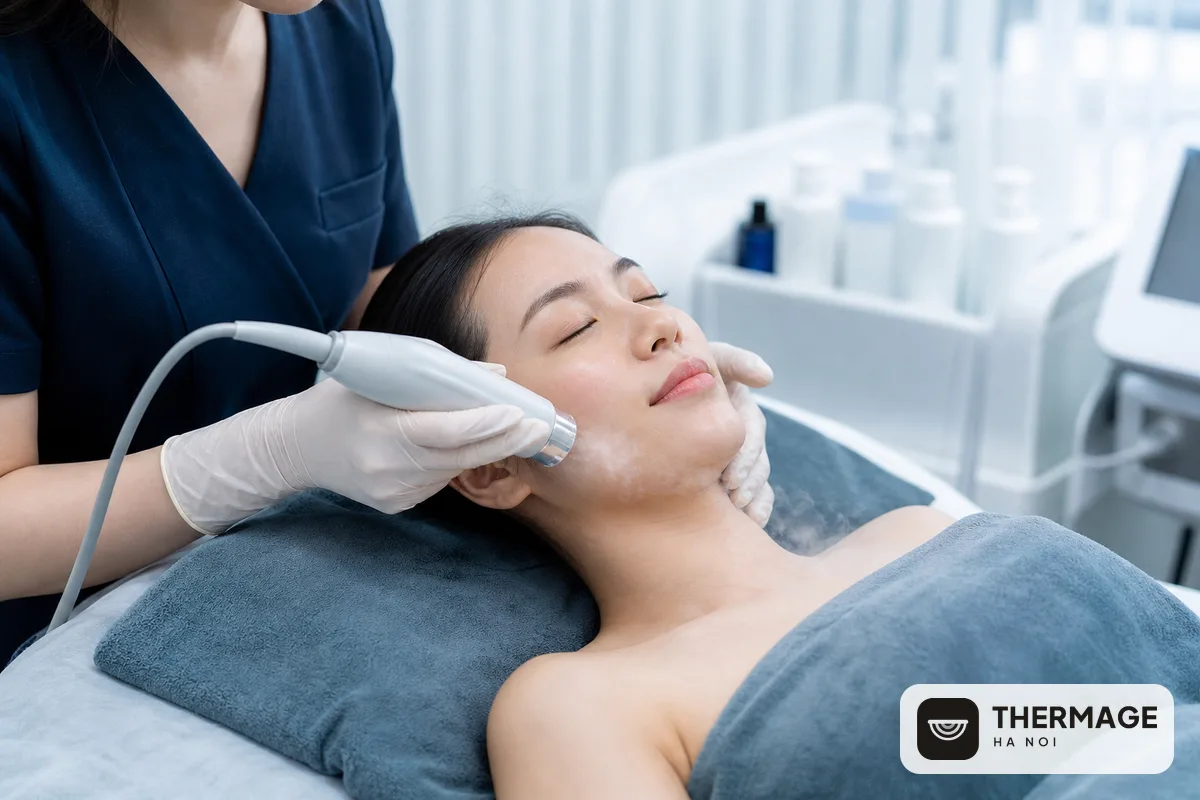
Vibration as a distraction, not a dial
Thermage FLX handpieces include a vibration feature designed to distract your senses from the heat of each pulse. It is a comfort measure only. The vibration does not reflect the energy level being delivered, so a stronger buzz does not mean a stronger treatment. Your practitioner controls energy separately.
What each pulse feels like
Most patients describe each pulse as a brief warm wave followed by a cooling sensation. The warmth comes from radiofrequency heating in the deeper skin, and the cooling follows as the cryogen system protects the surface. Some areas feel warmer than others, and your feedback helps your practitioner adjust as the session goes on.
How long a session takes
Sessions typically last 45–90 minutes depending on the area treated. Smaller zones such as the eyes move faster than larger body areas. The treatment areas Thermage FLX can address each use different handpieces and settings, and your practitioner plans these around your goals — whether that is the face, eyes, neck or body. For facial work, see the Thermage face overview.
Do you need numbing?
No numbing is usually required. Some clinics offer optional comfort measures, so ask what is standard where you book. If you are comparing options as an expat in Hanoi or arranging medical tourism Vietnam, confirm this during your consultation at a Thanh Xuan, Hanoi clinic.
AccuREP Technology: How Thermage FLX Auto-Tunes Each Pulse
AccuREP is the automated tuning system built into the Thermage FLX generation. At each pulse, it measures conditions at the treatment site and adjusts energy delivery in real time, rather than firing a fixed dose regardless of what the handpiece meets.
The aim is consistent heating across the treatment area, even where skin thickness, contour or handpiece contact varies. Faces are not uniform: the forehead, jawline and cheeks differ in thickness and resistance, and a pulse-by-pulse adjustment helps smooth out those differences.
Why This Matters for Your Comfort and Results
- More even delivery: energy is tuned to the tissue under the tip at that moment.
- Potentially better tolerated: fewer hot or cold spots as the handpiece moves across the face.
- Consistency across a session: useful on larger areas and when treating the neck or body.
This is one practical difference between Thermage FLX and older Thermage generations, which relied on less automated feedback. It does not replace practitioner skill. Planning the treatment, choosing settings, reading your skin response and knowing when to pause remain human judgments.
If you are comparing devices across Thermage generations in Hanoi, ask your clinic which generation they use and how they verify it. Genuine Thermage matters for both safety and results, so it is fair to ask for proof before booking. Our guide to genuine Thermage explains what to look for. Ann Med Spa in Thanh Xuan, Hanoi, welcomes expats and medical tourists who want these questions answered openly.
Immediate Collagen Contraction vs Neocollagenesis Over 2–6 Months
Thermage FLX works on two timelines. The first is almost immediate; the second unfolds quietly over weeks and months.
What happens right away
The heat from each radiofrequency pulse causes existing collagen fibers in your dermis to contract and thicken. Some patients notice a degree of early firmness or tightness soon after a session. This initial effect is real, but it is usually modest rather than dramatic.
The bigger change: neocollagenesis
The controlled heat also triggers a wound-healing response. Over time, your skin gradually produces new collagen and remodels the old framework. This process, called neocollagenesis, typically develops over 2–6 months. It is the main reason Thermage results are described as progressive rather than instant.
| Phase | What is happening | Typical timing |
|---|---|---|
| Immediate contraction | Existing collagen fibers tighten and thicken | Right after treatment |
| Neocollagenesis | New collagen is produced and remodeled | Over 2–6 months |
| Continued improvement | Skin quality may keep refining | Several months, varying by patient |
Results vary by age, skin quality, treatment area and technique. Many patients see continued improvement for several months, so judging the outcome too early can be misleading. You can read more about expected timelines in our guide to Thermage results and what recovery looks like in our results and recovery section.
Setting realistic expectations
Thermage is not a substitute for surgery, and it does not stop the aging process. Maintenance sessions are often discussed to help sustain results. At a Hanoi clinic such as Ann Med Spa in Thanh Xuan, a practitioner can assess your suitability and explain what is realistic for your skin.
Thermage vs Ultherapy vs HIFU: Different Technologies, Different Heating
Thermage FLX, Ultherapy and HIFU are often grouped together as "skin tightening" treatments, but they use different energy types and heat different depths. Understanding that difference helps you judge which option fits your anatomy and goals.
Thermage FLX: monopolar radiofrequency
Thermage FLX delivers monopolar RF to heat a volume of the dermis and fibrous septae. The heat is spread across a treated area rather than focused on a single point, and cryogen cooling protects the epidermis while the dermis warms.
Ultherapy: micro-focused ultrasound with imaging
Ultherapy uses micro-focused ultrasound with DeepSEE imaging by Merz. The imaging lets the practitioner see tissue layers and target deeper structural layers. It is FDA-cleared for brow lift, under-chin/neck lift and décolletage lines.
HIFU: a technology class, not one device
HIFU is a generic technology class used by several devices. Not all HIFU is Ultherapy, and protocols vary widely between systems and clinics. Ask which device is used and who operates it.
What Thermage is cleared for
Thermage is FDA-cleared for wrinkles and skin tightening in specific areas. Clearances differ between technologies, so match the claim to your concern.
Which is right for you?
There is no universal winner. The right choice depends on your anatomy, goals and what a qualified practitioner recommends after assessment. For expats in Hanoi and medical tourism Vietnam visitors, compare clinics carefully — see our Thermage comparisons for more.
Thermage in Hanoi, Vietnam: Choosing a Qualified Clinic
Because Thermage results depend on the device, the settings and the hands operating it, the clinic you choose matters as much as the technology itself. Before you book a session in Hanoi, ask three questions: does the clinic use genuine Thermage FLX by Solta Medical, who will perform your treatment, and what training and experience does that practitioner have with radiofrequency skin tightening?
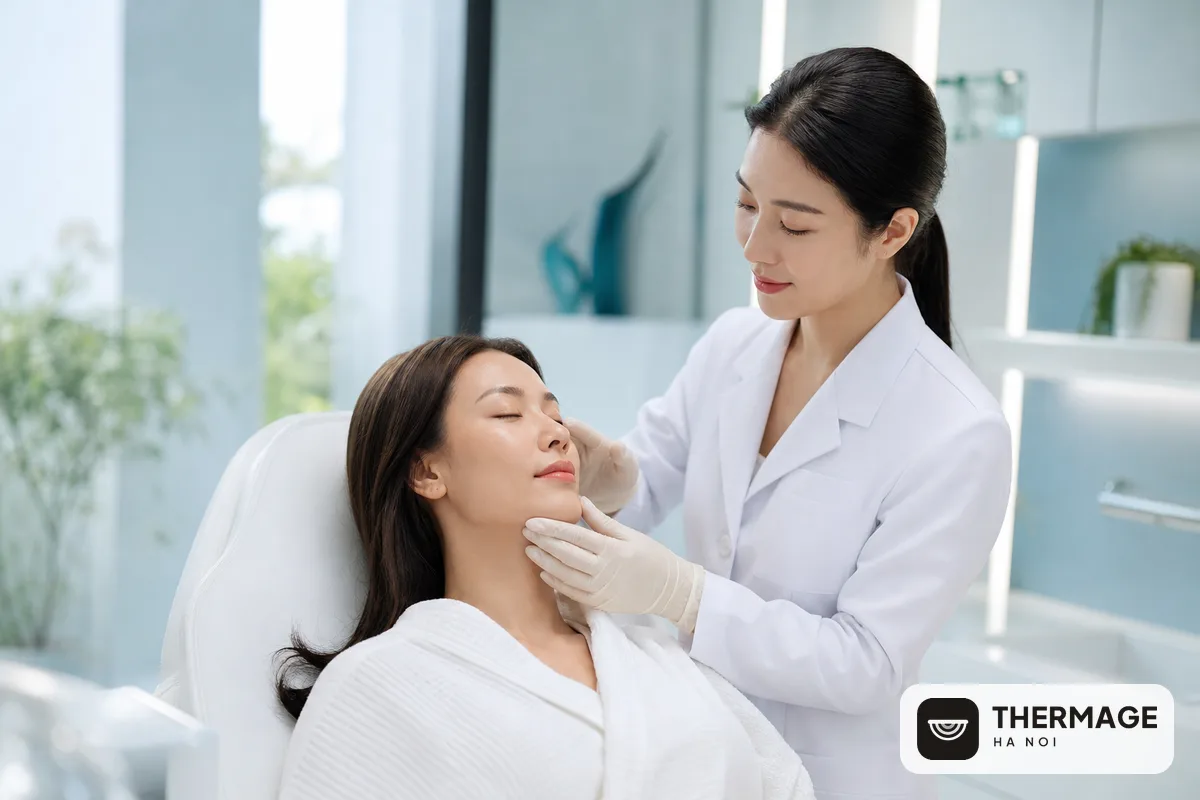
For expats in Hanoi and foreigners in Vietnam, language is part of safety. Confirm that your consultation, consent and aftercare instructions are available in English, so you understand your skin assessment, the expected sensation and what to do if you have any concerns afterward.
If you are planning medical tourism in Vietnam, build recovery time around your flights. Sun exposure and Hanoi's humid weather can affect comfort after treatment, so discuss sun protection and aftercare before you travel rather than after.
Ann Med Spa in Thanh Xuan, Hanoi is one option for a consultation. Ask about device verification, whether patch testing is offered, and exactly what a session includes. For more background, see our guides to Thermage in Hanoi and choosing a clinic.
What to Ask Before Booking: A Practical Checklist
Before you book Thermage FLX in Hanoi, a short, direct conversation with the clinic tells you most of what you need to know. Use this checklist.
Device and consumables
- Which Thermage generation and handpieces will be used for your face, eyes or body?
- Can you see the device and the sealed, single-use treatment tip before your session?
- How do they verify authenticity? Ask about serial numbers and original packaging.
Who performs it, and how they screen you
- Who will perform the treatment, and what is their training and experience with radiofrequency?
- How do they assess suitability and review contraindications — pregnancy, implants, pacemakers, active skin conditions or recent fillers?
- Will they tell you honestly if Thermage FLX is not right for you?
Aftercare and follow-up
- What aftercare do they recommend in the first days, and what follow-up is included?
- Who do you contact if something concerns you afterward? Read more in our Thermage aftercare guide.
Pricing
- How is pricing structured — by handpiece, area or number of passes — and what exactly does it cover?
- Be cautious of unusually low offers without verification of the device, tip and practitioner.
- See how clinics typically structure costs in our Thermage price guide.
At Ann Med Spa in Thanh Xuan, Hanoi, you can ask these questions directly during a consultation, whether you live in Vietnam or are visiting for medical tourism.
Understanding how Thermage FLX heats, cools and remodels collagen helps you ask better questions and set realistic expectations. If you are in Hanoi and want to discuss whether Thermage FLX suits your goals, you can book a consultation with Ann Med Spa in Thanh Xuan.
Considering Thermage FLX in Hanoi? Ann Med Spa in 1N7A Nguyen Thi Thap, Thanh Xuan, Hanoi offers in-person assessments for Thermage FLX and our other non-surgical skin tightening treatments, open daily 8:30–19:00. Book a consultation and we will recommend the option that suits your skin, goals and schedule.
Frequently asked questions
How long does it take for Thermage results to appear?+
Some patients notice early firmness soon after treatment, but most collagen remodelling develops gradually over 2–6 months. Results vary by individual and treatment area.
Is Thermage FLX painful?+
Most patients feel brief warmth or heat during each pulse, with cooling and vibration to improve comfort. Your practitioner can adjust settings based on your feedback.
Where can I get Thermage FLX in Hanoi?+
Ann Med Spa in Thanh Xuan, Hanoi offers consultations for Thermage FLX. Ask about device verification, practitioner training and what a session includes before booking.
Can I fly home after Thermage in Vietnam?+
Many patients return to normal activities the same day, but it is wise to discuss travel timing with your practitioner, especially if you have long flights or sun exposure planned.
Who should not have Thermage?+
Thermage is not suitable for everyone; contraindications may include pregnancy, certain implants or skin conditions. A qualified practitioner should assess your suitability during consultation.
- #how does thermage work
- #thermage flx
- #monopolar radiofrequency skin tightening
- #thermage hanoi
- #thermage vietnam
- #thermage results
Considering this treatment?
Book a Thermage consultationThis article is for general educational purposes and is not medical advice. Results vary from person to person. Please consult a qualified medical professional to find out whether Thermage FLX is suitable for you.